


Vol.080 — AI Native, Japan edition — DAY 2: The Client was not LEARNING but PLAYING with AI Webmaster.

Date: 2026-10-21 | Newsletter · AI Native, Japan edition · DAY 2 of 4
Day 1 ended with two minutes against two weeks — the CEO of a Japanese cosmetics manufacturer watching her website change in front of her, and the thirty-page PowerPoint she used to brief her outside web designer suddenly looking like a museum piece. I wrote then that the business case was one invoice: the agency fee she pays because nobody in-house can write HTML. Day 2 was supposed to be the site audit. It was, eventually. But the session opened with something I had not planned for, and I want to start there, because it changed the tempo of the whole programme.
She had been “PLAYING” all week
One of the two participants opened Day 2 by asking to show me something. Between the sessions, she had been talking to the AI Webmaster on her own, and she had designed her first website with it. It looked, I will say plainly, impressive — not a template with the logo swapped, a real first design. She had set herself up inside ChatGPT’s Work mode, in a Project, with the webmaster’s instruction file loaded, and she had simply kept going after I left for DAY 1.
This is the thing I most want Singaporean owners to take from Day 2, before any of the technical lessons: the staff member who “PLAYS” between sessions changes what the training can be. We were a week ahead of my plan before I had said a word, and the audit I had scheduled suddenly had the luxury of time around it.
So I upgraded the webmaster first
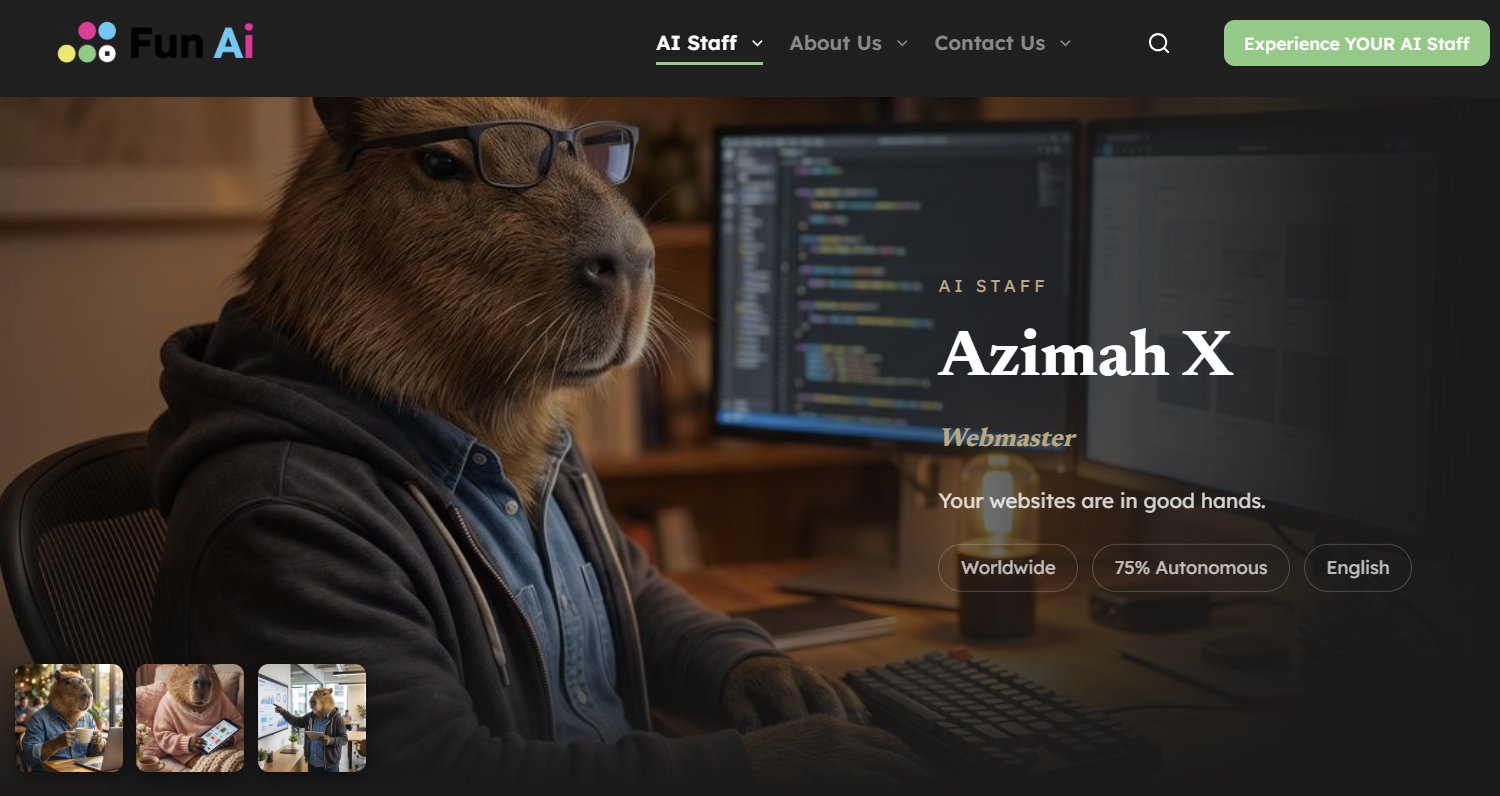
Because they were ahead of training schedule, I made a decision before the audit: install the new, generic AI Webmaster — not the one inherited directly from my own webmaster, but a version written for a client company — with a wider scope. Seven roles, defined in writing: site operation and maintenance, always in a “read, then draft” mode with approval before anything goes live; SEO and answer-engine optimization; image generation in the brand’s colours, license-safe only; site security, including watching the hosting provider’s warning mails and grading their urgency; customer service, reading the company mailbox and drafting replies for approval; contract and subscription management, with warnings before anything expires; and translation coordination for a multilingual site, with a hard rule of no automatic translation, ever.
On Day 1 the webmaster was a tool that edited a page. By the end of Day 2’s first hour it had a job description. That shift — from a task tool to a department — is the real product of the four sessions, and it is why I keep calling it a staff member rather than a tool.
The hard part was not the AI. It was finding the Documents folder
I promised in Day 1 not to pretend the plumbing away, so here is Day 2’s plumbing. The struggle in the room was not the install. The CEO had recently moved from Windows to a Mac, and she was still hunting for basics — where the Documents folder lives, for one. We laughed about it, and then we spent real minutes on it. I note it because it is true of every AI Native engagement I have run: the friction is almost never the AI. It is the ordinary computer around it.
Two people, one AI, and everything shared by email
I asked the two of them how they share documents day to day. By email. They have a natural division — one plays the active webmaster role, the other does more of the deciding — and they work together daily, so every draft was travelling between them as an attachment. We connected the Google Drive plug-in, and from that point each of their webmasters could read and write HTML documents from the same shared source. Day 2 ended with three of them — two humans and the AI Webmaster — working off one drive, with everything they generate shareable by link. It is a small change on paper. In practice it is the difference between an AI that helps one person and an AI that sits inside a team.
Website audit: the shopping site had a lot of problems, and it was good news
Then Website audit by the new AI webmaster, on two sites: the corporate site and the online shop, from two angles, SEO and security. Security came back with only a few flags — the setup had already been built to be shared between the two of them and their current human webmaster. SEO was a different story. The shop, hosted on Cafe24, had a long list: incomplete product descriptions, missing meta information, images without the basics. For an online shop that is the definition of invisible.
I say it was good news because of what they told me next. They are planning to launch new cosmetics brands. Starting from zero, they can plan the whole visibility stack properly: who the target audience is, which keywords, which competitors rank for those keywords and why, which Japanese e-commerce platforms to use — and here is the line that landed in the room — now that the webmaster does the work, their capacity to run shops is effectively limitless; many EC sites from one small operation. Plus answer-engine optimisation on both sites, built in from the start rather than retrofitted. To support that we opened Google Ads’ Keyword Planner, the beginner’s version, and added it to the webmaster’s toolkit.
The first homework went to the active participant: go through the shop’s SEO issues with the AI Webmaster, one by one. It is practice for Cafe24 in particular and for e-commerce platforms in general, and it is also where the Day 1 invoice starts to be retired — every one of those product descriptions used to be a job for someone outside.
“This Project might not be taking the instructions”
And then, near the end, the catch — the most useful thing that happened on Day 2 and the one I would least like to leave out. The active participant said, carefully: “This ChatGPT Project might not be taking the instructions defined by our instruction files.”
She was right. We had believed we had fed the instruction files into the Project and told ChatGPT to follow them. It had not. She had been working, for the whole session and the whole week before it, in plain Codex with no particular instructions applied. Two reasons, both of them environment rules rather than AI limits. First, my instruction file was too big: ChatGPT caps the file at under 32 kilobytes, which is small. Second, the file was not called Agents.md. ChatGPT needs that filename to treat a file as its rule set; telling it “make this file your rule” does not do it.
The fix was procedural: I wrote clear instructions on how to check whether the instruction file is actually loaded and being followed — by kicking off the onboarding process that is defined inside the instruction file itself. If the onboarding runs, the rules are in. If it does not, they are not, whatever the chat window says.
I also owe Day 1 a correction. I wrote there that an AI staff member is the operating file, not the model — that the same webmaster that runs on Claude for us ran on ChatGPT for them. That is still true. It is not free. The operating file ports; the environment imposes its own rules on it — a size cap, a filename convention — and if you do not check, you can run for a week believing your staff member is on duty when it is a stranger with the same name. Her design from that week was good. It was made without the rules. I find that encouraging rather than embarrassing, because it means the person was ready before the setup was.
What Day 2 closed, and what I am watching
Closed: the first site design; the shared folder structure, one source, three users; and the first working idea of what “visibility” means and how to check it. They are shifting from a company that maintains a site to one that promotes. Open for Day 3: the shop’s SEO homework, worked through with the webmaster, and whether the product descriptions start arriving without an invoice. The corporate site is deliberately left alone for now — their human webmaster is finishing corrections they requested before the training began, and I will not have two webmasters, one of them a machine, editing the same pages. And the question from Day 1 still stands: does a CEO who already uses ChatGPT two hours a day become someone who runs an AI staff member? Day 2’s answer is that she ran ahead of the instructor. That is a start.